9:05 AM ▪
4
min read ▪ by
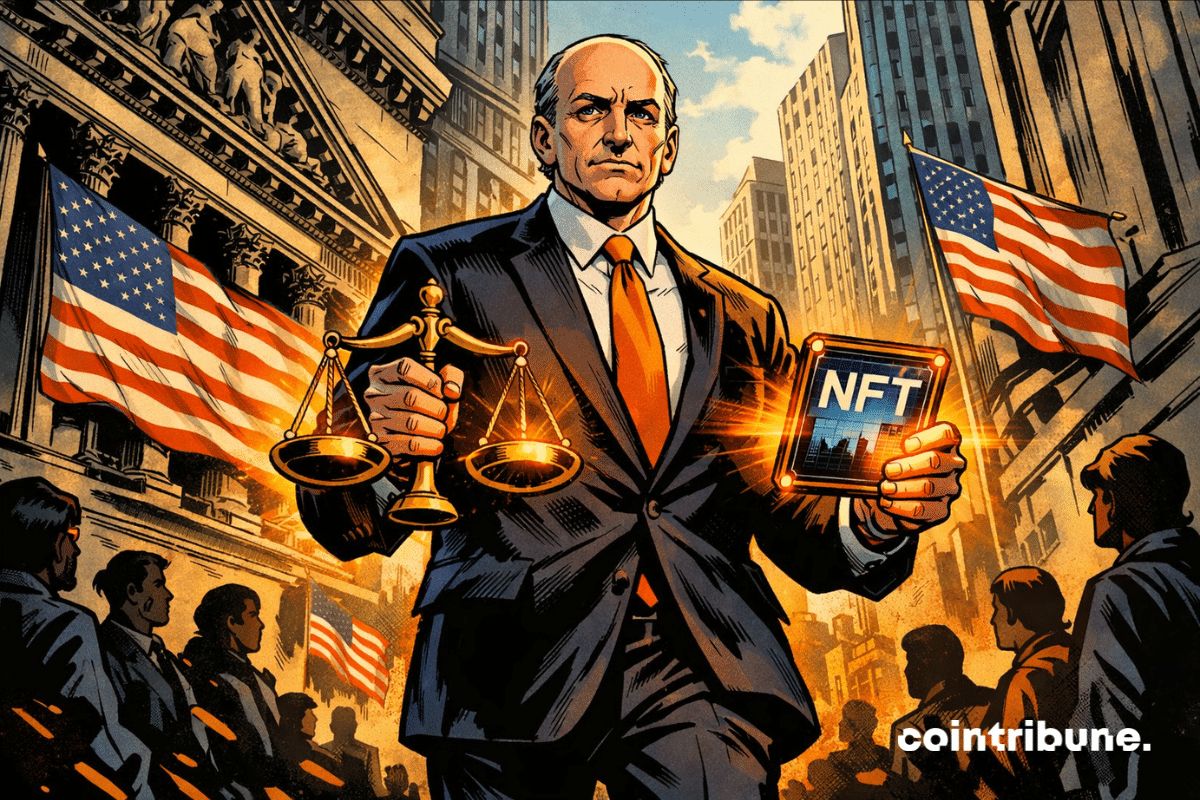
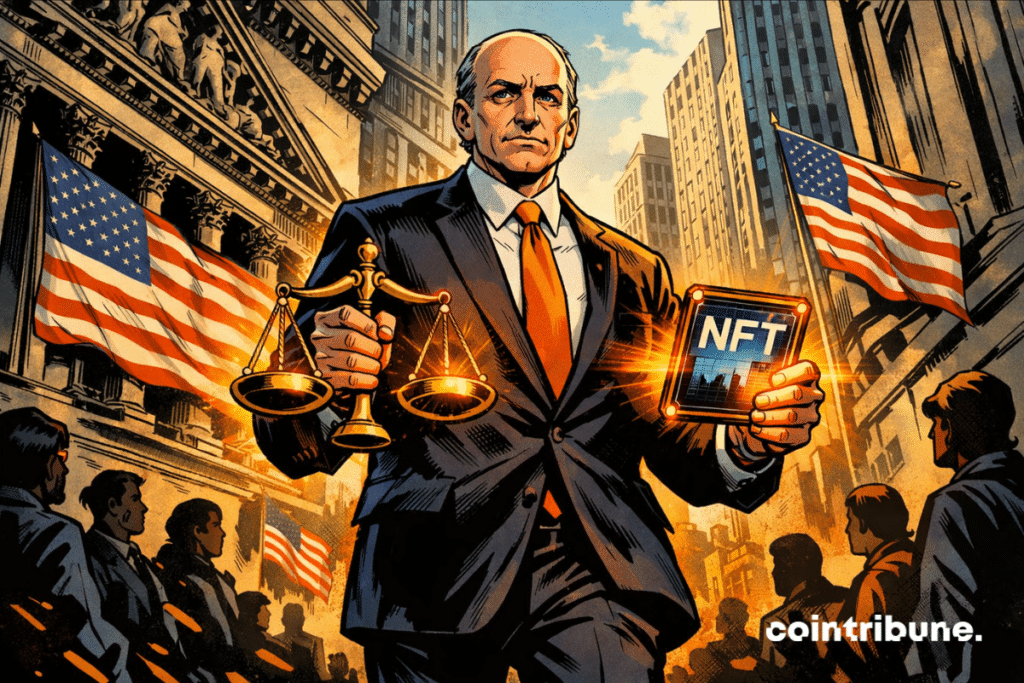
Cryptocurrency regulation is evolving in the United States with a lot of clarification on NFTs. Indeed, SEC Chairman Paul Atkins explained that these digital assets are generally considered collectibles. In most cases, therefore, they are not subject to securities laws.
In short
- The SEC believes that NFTs are generally collectibles, not securities.
- Four types of digital assets are designated as exempt from securities laws.
- NFTs are still evaluated on a case-by-case basis based on their structure and actual usage.
- Despite these clarifications, uncertainties remain in the regulatory framework, which is still evolving.
Four types of digital assets are outside the scope of securities
After the United States Securities and Exchange Commission (SEC) published its interpretation that most crypto-assets are not securities, the regulatory framework became clearer.
In an interview with CNBC on Wednesday, Paul Atkins confirmed this approach. He explained that a recent publication identifies four types of digital assets generally excluded from securities.
- digital commodities
- digital tools
- digital collectibles such as NFTs
- stablecoins
This distinction, according to Atkins, therefore allows for better structuring of the market. In addition, it helps companies and investors understand the applicable rules.
NFTs are considered collectibles, but are analyzed on a case-by-case basis
He further stated that NFTs (Non-Functional Tokens) are similar to traditional collectibles. Users often buy them to keep, not to generate direct financial returns. Therefore, these digital assets do not meet the definition of an investment contract in most cases. This distinction remains crucial in regulatory analysis.
This approach likens NFTs to physical objects such as baseball cards, they are goods that users buy and keep rather than assets to be traded. Their primary use thus plays a determining role in their classification.
However, regulation does not rely on a single rule. According to Atkins, each NFT is rated according to its own characteristics. The authorities examine in particular the conditions of sale, related promises and the role of the issuer.
Some projects may thus be reclassified as securities based on their structure. However, most NFTs remain outside this framework. This case-by-case approach helps avoid overly rigid classification of the market by the SEC Chairman.
Regulatory clarification that still leaves uncertainty about NFTs
These clarifications come after the US financial regulator mentioned in another context the establishment of a safe zone for crypto companies. This measure offers a more flexible framework during the initial stages of development.
However, these elements do not clarify all uncertainties. The design and use of NFTs still determine their qualifications. As a result, some situations may still invite different interpretations.
Moreover, this approach takes place in an evolving regulatory environment. The rules remain variable across jurisdictions, complicating their application internationally. The regulatory trajectory thus remains open. Between gradually clarifying and adapting to use, authorities will have to adjust their position towards the ever-evolving crypto market.
Maximize your Cointribune experience with our “Read and Earn” program! Earn points for every article you read and get access to exclusive rewards. Register now and start reaping the benefits.

Journalist and web editor passionate about the world of cryptocurrencies and Web3 technologies. I focus on the latest trends and news in order to offer high quality content to a wide audience in the industry.
DISCLAIMER OF LIABILITY
The views, thoughts and opinions expressed in this article are solely those of the author and should not be taken as investment advice. Before making any investment decision, do your own research.