14:05 ▪
4
min read ▪ by
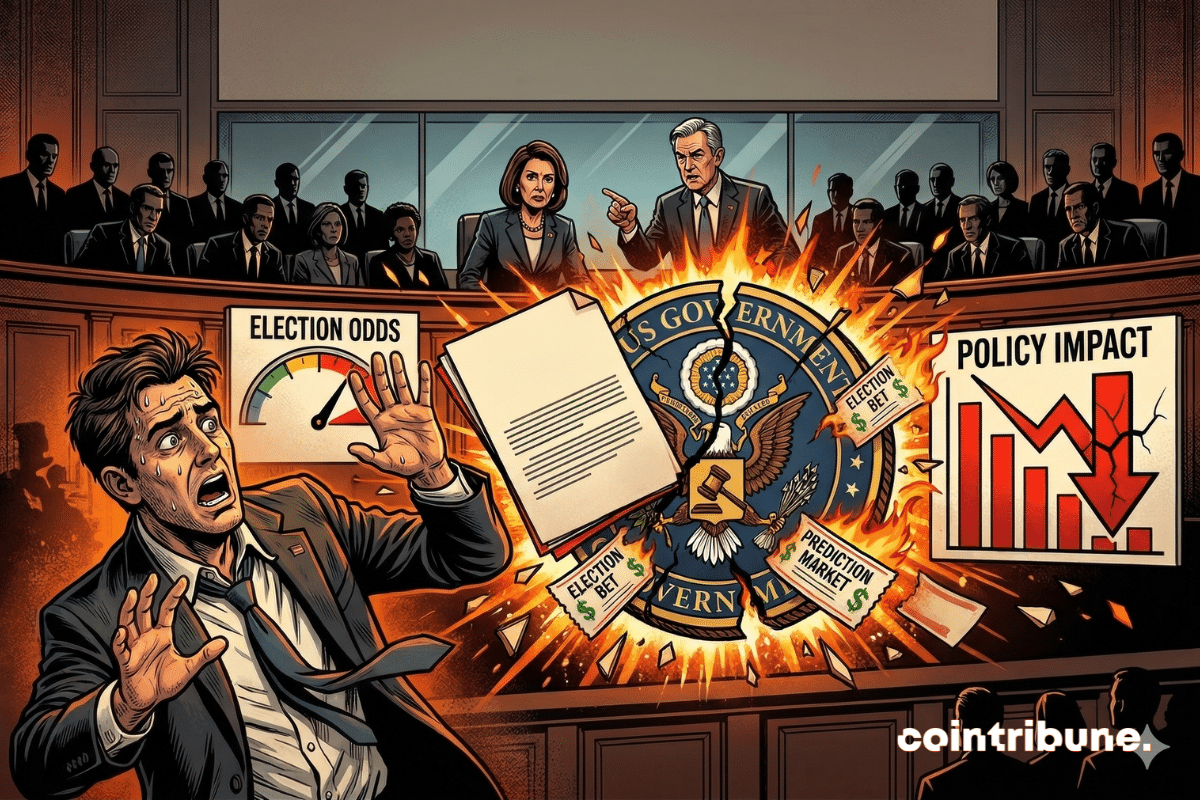
The tone around Polymarket and Kalshi in the United States is increasing significantly. Dozens of Democratic lawmakers are calling for increased oversight of prediction markets, which they see as increasingly exposed to the risks of insider trading. Their position is fixed: no prosecutor can use privileged information to take a position in the market.
In short
- More than 40 Democratic lawmakers have asked the CFTC and the Office of Government Ethics to lift the ban on insider betting in the prediction markets.
- The suspicions relate to orders related to highly sensitive political, military and institutional events.
- Polymarket and Kalshi have already started tightening their internal rules under political and regulatory pressure.
Democrats are sounding the alarm about insider trading in the markets
On March 29, 2025, more than 40 Democratic senators and representatives sent a joint letter to Mike Selig, chairman of the Commodity Futures Trading Commission (CFTC), as well as senior officials of the US Office of Government Ethics (OGE).
The message is clear: federal officials must stop betting on predictive markets based on confidential information obtained in the course of their duties.
Among the signatories are Senate heavyweights: Elizabeth Warren, head of the Banking Committee, and Cory Booker, a central figure on the Agriculture Committee. Maxine Waters and Angie Craig, respectively the Democratic chairs of the House Financial Services and Agriculture Committees, also signed on.
The letter points to specific and disturbing incidents. The contracts seemed to attract well-targeted bets on military operations in Venezuela and Iran, the exact duration of a White House speech, or the firing of Kristi Noem. Coincidences that are hard to ignore.
The lawmakers’ legal argument is solid. Since the CFTC classified Polymarket and Kalshi’s contracts as regulated derivatives, US law fully applies: any official who uses non-public information to make a profit is committing insider trading, period.
Polymarket and Kalshi, pressure holders
This political offensive does not fall on zero. Kalshi and Polymarket have already anticipated the pressure by tightening their internal rules in recent weeks.
Kalshi has implemented technological filters to block sensitive profiles, political candidates, athletes before betting on events they can influence. For its part, Polymarket now explicitly prohibits positions based on stolen information or illegal “tips”.
But are these adjustments sufficient? Not in the eyes of Washington. Federal prosecutors have reportedly already contacted these platforms to assess whether some cases warrant prosecution.
Meanwhile, the CFTC is working to develop a new regulatory framework and has publicly questioned the vulnerability of these markets to manipulation and unfair practices, including when they rely on blockchain.
For the cryptoecosystem, the signal is clear: onchain transparency is no longer a shield against compliance requirements. These platforms, long presented as mere aggregators of collective information, are now seen as financial products with systemic risk. The bigger they grow, the more intense the control.
Decentralized prediction markets have long struggled with legal ambiguity, presenting themselves as simple aggregators of collective opinion. But once American officials could bet on the decisions they make themselves, political tolerance is crumbling. Crypto is no exception to a rule as old as finance: the bigger the market grows, the more the regulator settles in.
Maximize your Cointribune experience with our “Read and Earn” program! Earn points for every article you read and get access to exclusive rewards. Register now and start reaping the benefits.

I am passionate about Bitcoin, I love exploring the intricacies of blockchain and cryptocurrency and sharing my discoveries with the community. My dream is to live in a world where privacy and financial freedom are guaranteed for everyone, and I firmly believe that Bitcoin is the tool that can make this possible.
DISCLAIMER OF LIABILITY
The views, thoughts and opinions expressed in this article are solely those of the author and should not be taken as investment advice. Before making any investment decision, do your own research.