Sun March 1, 2026 ▪
4
min read ▪ by
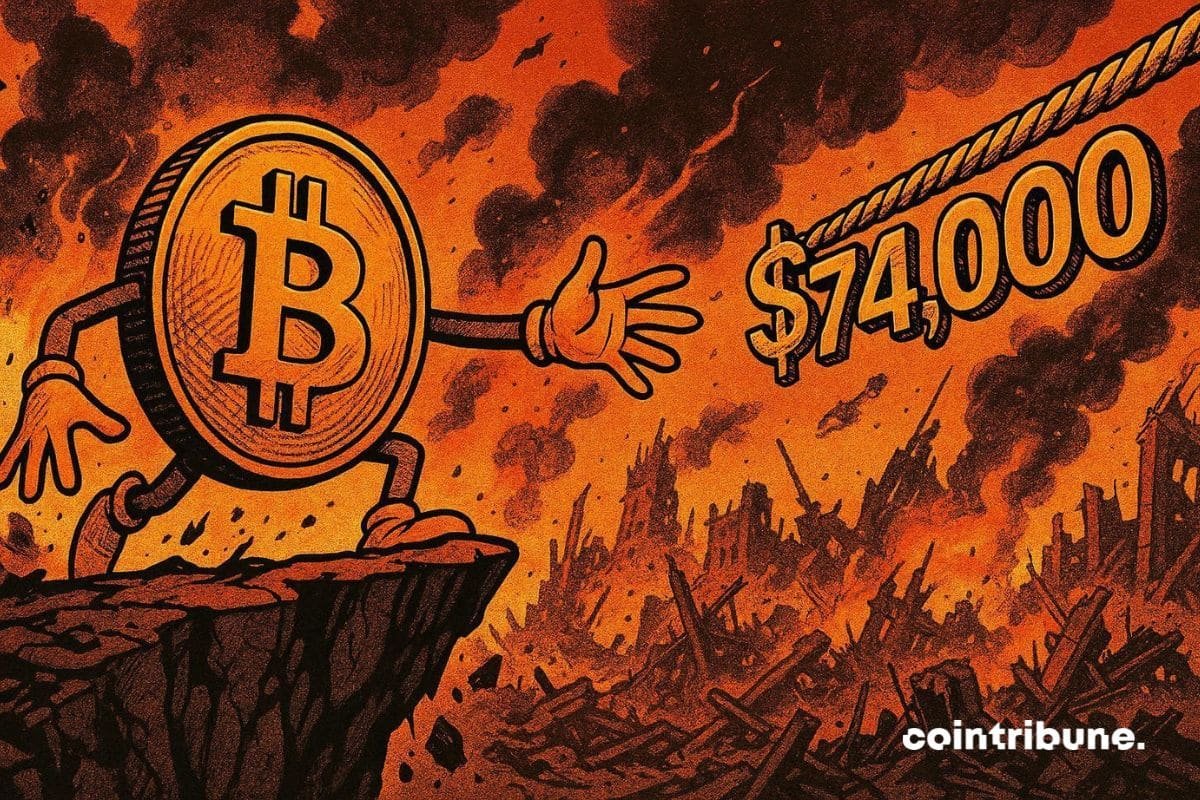
The Strait of Hormuz has closed, oil is boiling and US inflation is at 5%. In this explosive context, Bitcoin is holding firm at $67,000. Here’s how BTC could turn this crisis into a $74,000 opportunity.
In short
- The closure of the Strait of Hormuz and geopolitical tensions pose a risk for Bitcoin to fall below $60,000.
- Traders are targeting $74,000 if BTC breaks the $67,627 moving average, but Monday’s US market opening will be decisive.
- A 5% inflation rate in the United States could strengthen bitcoin’s appeal as a safe-haven asset.
Iran/Strait of Hormuz crisis: Bitcoin is strong against all odds
Iran’s closure of the Strait of Hormuz in response to US and Israeli strikes sent shockwaves through oil markets. With 20% of the world’s oil blocked, JPMorgan analysts are forecasting $120-$130 a barrel, which could push US inflation up to 5%. However, Bitcoin, often sensitive to geopolitical crises, remains around $67,000.
This resistance is explained by several factors. First, some of the geopolitical risks were already anticipated by the markets. Additionally, reduced liquidity over the weekend dampened volatility. However, if Iran steps up its actions by targeting, for example, oil infrastructure, BTC could then face further pressure.
Bitcoin for $74,000? What the charts reveal
Bitcoin charts show an interesting technical structure. Indeed, on the daily chart, BTC held key support at $65,000, while resistance at $74,000 is becoming a realistic target for the coming days. Closely watching is the 21-day moving average, which sits around $67,627! A breakout above could then trigger a significant rebound.
However, Michaël van de Poppe believes that Bitcoin needs to break this moving average to start a real rally. Crypto Caesar predicts sideways movement before a clear decision. BitBull, more bullish, sees signs of strength in the current stability with a target of $74,000 if mainstream markets hold.
Inflation at 5%, Fed under pressure: Will BTC become the new digital gold?
With US inflation possibly reaching 5%, the Fed finds itself in a delicate position. Historically, Bitcoin has often been compared to digital gold, a safe haven during economic crises. However, its current correlation with stock markets such as the Nasdaq shows that it remains a risky asset in the short term.
The data show that a $10 increase in the price of oil can add about 0.2% to the US CPI. In this context, Bitcoin could benefit from a state of limited supply, especially if institutions continue to accept ETFs. However, if the geopolitical situation deteriorates into a recession, BTC could fall below $50,000.
Bitcoin stands at a crucial crossroads. On the one hand, the geopolitical crisis and soaring inflation could drive it to new highs. On the other hand, an escalating conflict or an economic recession could cause it to collapse. What do you think, could BTC reach $74,000 in this context?
Maximize your Cointribune experience with our “Read and Earn” program! Earn points for every article you read and get access to exclusive rewards. Register now and start reaping the benefits.

The world is evolving and adaptation is the best weapon to survive in this wavy universe. Originally a manager of the crypto community, I am interested in anything directly or indirectly related to blockchain and its derivatives. In order to share my experiences and promote a field that I am passionate about, there is nothing better than writing informative and relaxed articles.
DISCLAIMER OF LIABILITY
The views, thoughts and opinions expressed in this article are solely those of the author and should not be taken as investment advice. Before making any investment decision, do your own research.