7:05 AM ▪
4
min read ▪ by
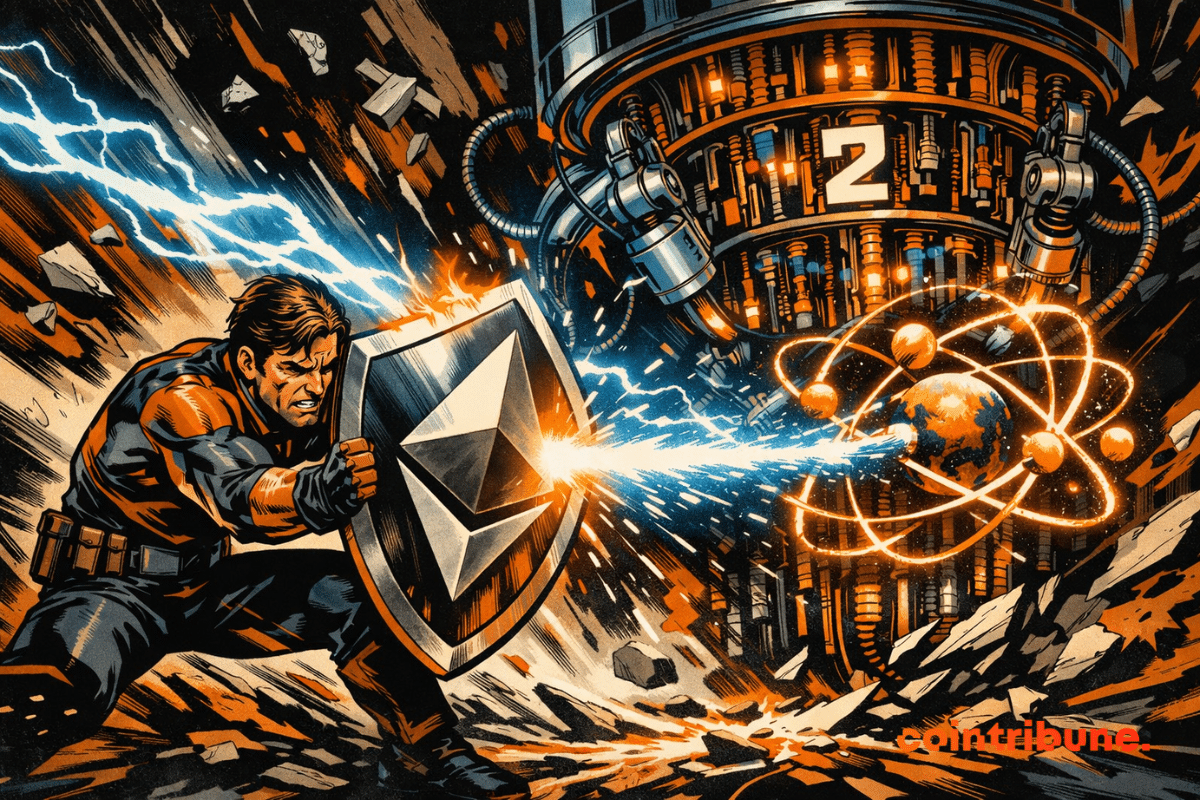
Ethereum is accelerating its transition to quantum resilience, embarking on one of the most ambitious evolutions in its history. A new technical roadmap outlines how blockchain is preparing for the arrival of quantum computers, which threaten four fundamental components: consensus, data, accounts and proof. Developers offer specialized solutions to strengthen each area with a clear goal: to guarantee complete security for decades to come.
In short
- Ethereum is upgrading its blockchain to withstand threats from quantum computers.
- The network replaces classic signatures with robust algorithms and optimizes block management with STARK.
- User wallets will benefit from advanced signatures and reduced transaction fees.
- The Ethereum Foundation supports cryptographic research to ensure a resilient blockchain in the long term.
Strengthening Ethereum Consensus Layer for Quantum Resiliency
The ETH blockchain currently uses classic cryptographic signatures. These elements become vulnerable to future computing capabilities. Therefore, the developers plan to completely replace these BLS signatures. They will use much more robust hash functions. The system will also use STARKs technology. This tool effectively aggregates large amounts of data.
In his post on X, Vitalik Buterin points out that choosing a hashing algorithm is a real challenge: traditional methods are often slow and some have security flaws. The team is exploring alternatives such as Poseidon or BLAKE3, which offer an optimal balance between speed and computational robustness.
Protecting data availability from supercomputers
Ethereum manages data availability using the KZG system. This method effectively encodes information in the underlying network. The transition to STARKs, however, greatly complicates this procedure. STARKs lack the mathematical flexibility of KZG. This difference forces the network to limit its technological ambitions.
The ETH co-founder expects these limitations to require complex recursive systems and progressive development work to ensure data availability. Teams will need to solve these logistical challenges to maintain network reliability while integrating post-quantum cryptography.
Securing user wallets and reducing gas fees
The update also applies to user accounts. Ethereum will natively integrate account abstraction. This development fundamentally changes how addresses work. The network will accept any secure signature algorithm. But a financial problem arises very quickly.
Verification of a classic signature costs only three thousand units of gas today. Hidden signatures require much more computing resources. Some verifications cost up to two hundred thousand units. To reduce this transaction price, the network will use vectorized mathematics. As Buterin explains, this optimization is necessary to keep post-quantum security accessible to users.
Ethereum Foundation Mobilizes Research for Post-Quantum Security
The Ethereum Foundation is actively accelerating its development efforts. Last January, the organization created a new team dedicated to post-quantum security. Thomas Coratger now leads this group of technical experts. Developers are already testing future transactions on isolated networks. These multi-client environments guarantee full system compatibility.
In addition, the foundation offers two prizes of one million dollars each. These financial rewards greatly stimulate global cryptographic research. Vitalik Buterin strives for a fully autonomous network architecture. The creator wants to build a durable and infallible blockchain. This advanced infrastructure must protect the system for a hundred years.
The integration of these new cryptographic technologies will certainly take several years. This technical transition will define future standards for the Ethereum ecosystem. The mainnet will deploy these heavy updates very gradually. The developers will carefully verify each step of this complex process. Ethereum thus anticipates the most remarkable computing mutation of the century. The protocol will sustainably secure digital assets against future supercomputers.
Maximize your Cointribune experience with our “Read and Earn” program! Earn points for every article you read and get access to exclusive rewards. Register now and start reaping the benefits.

Journalist and web editor passionate about the world of cryptocurrencies and Web3 technologies. I focus on the latest trends and news in order to offer high quality content to a wide audience in the industry.
DISCLAIMER OF LIABILITY
The views, thoughts and opinions expressed in this article are solely those of the author and should not be taken as investment advice. Before making any investment decision, do your own research.