14:05 ▪
5
min read ▪ by
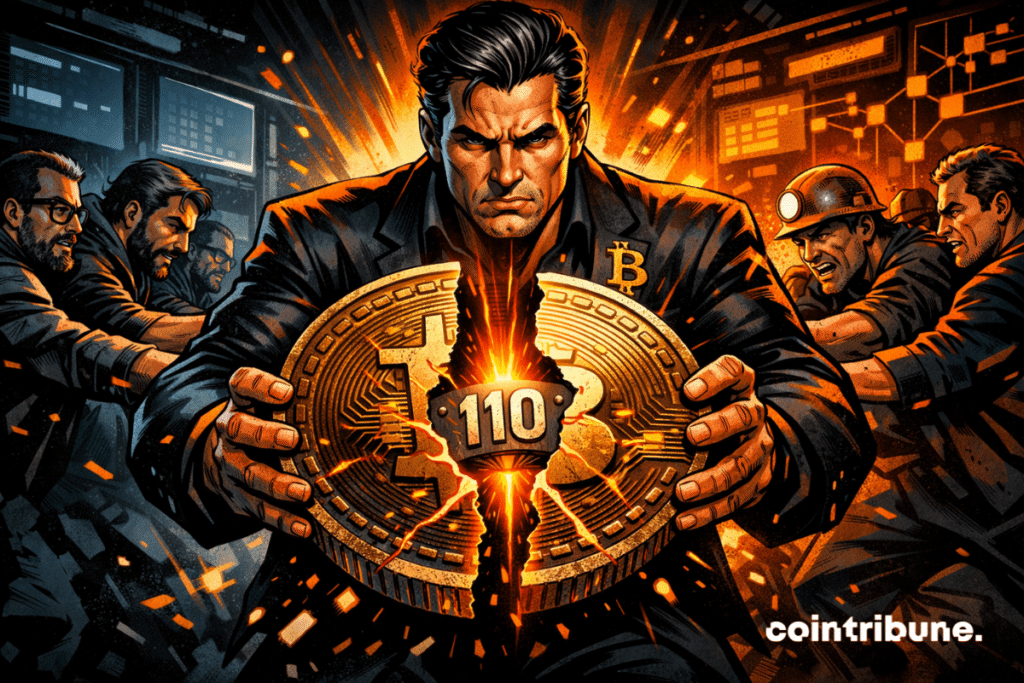
Bitcoin is going through a rare moment of tension. The debate surrounding BIP 110 is not just about a technical update. It concerns the very definition of Bitcoin, its neutrality and the limit of what the network is allowed to accept.
In short
- Bitcoin is divided around 110 BIP.
- The goal of the text is to temporarily limit some non-monetary data on the blockchain.
- The real shocker is about governance and the line between network protection and censorship.
BIP 110 revives an old internal war
Bitcoin is currently divided over a seemingly simple question. Should the network remain a minimalist monetary instrument, or tolerate wider usage on its blockchain? The sticking point is called BIP 110, a project still in the design stage, presented as a temporary soft fork designed to reduce the place of arbitrary data in transactions.
One point needs to be clarified at the outset. Contrary to some confusing presentations, BIP 110 does not aim to replace the longest chain rule with miners voting on valid blocks. The text published in the official BIP repository describes something else. Temporarily limiting, at the consensus level, several forms of data embedded in Bitcoin.
To be clear, the proposal seeks to limit uses that are considered non-monetary, such as certain data labels, large scripts, and certain vectors that its supporters consider “spam.” Its author, Dathon Ohm, presents it as a way to reorient Bitcoin to its digital money function.
The real problem is not technical but political
The debate appears to be technical, but it is mainly political in the Bitcoin sense. Behind BIP 110 is the real question of power: who decides what Bitcoin should become? Developers, miners, node operators or the market itself?
Proponents of the text argue that the blockchain is being gradually overburdened in ways unrelated to Bitcoin’s payments or monetary purpose. Allowing these practices to flourish increases fees for them, burdens node operators, and degrades the experience of regular users. The BIP document specifically highlights these costs of decentralization and the pressure placed on the UTXO set.
Opponents see a deeper danger. Adam Back decried a consensus-level crackdown that could damage Bitcoin’s credibility as a store of value and open the door to the logic of transactional censorship. This camp does not necessarily prevent registration. He mainly defends the idea that the consensus rule must not be changed because of a temporary irritation.
Bitcoin: 55% Threshold That Sparks Debate
Fierce controversy further due to the activation mechanism. BIP 110 proposes a 55% hash power threshold, a far cry from the 95% standard often associated with sensitive changes to Bitcoin. The text assumes this choice in the name of urgency and the temporary nature of the measure. This is exactly what ails part of the ecosystem.
This detail changes everything. With a lower threshold, critics worry about setting a precedent. Today to restrict arbitrary data, tomorrow for something else. In Bitcoin, precedents count almost as much as code. Once the community accepts that a narrow majority can impose restrictions at the consensus level, the red line is erased.
Even the miners’ signaling narrative illustrates this extreme sensitivity. In March 2026, the first block favoring BIP 110 sent a signal through the ocean-connected infrastructure, before several reports clarified that the software was being used by a solo miner without official approval from the pool. In such a climate, every block becomes a political message.
Bitcoin is playing more than just its technology in the coming weeks
Michael Saylor added to the tension by saying that Bitcoin has already won the battle for the global narrative, but that its biggest risk now remains bad ideas that can cause harmful changes to the protocol. This statement has thrown the debate into new relief as it directly links technical management to the future value of the network.
The timing further reinforces the importance of the topic. The Bitcoin 2026 conference remains scheduled for Las Vegas from April 27-29, almost simultaneously with the Fed meeting on April 28-29. On the one hand, the market will follow the macroeconomic message. On the other hand, the Bitcoin ecosystem will continue to question the direction of the protocol.
At heart, the BIP 110 acts as a detector. Bitcoin isn’t just about arguing about spam or registrations. He faces a more brutal question: how far can he evolve without betraying himself? As long as that answer remains unclear, every proposal for change will bring the same crack to the surface. And this crack has a name today: BTC.
Maximize your Cointribune experience with our “Read and Earn” program! Earn points for every article you read and get access to exclusive rewards. Register now and start reaping the benefits.

Fascinated by Bitcoin since 2017, Evariste has been constantly researching the topic. While his initial interest was in trading, he now actively seeks to understand all developments focused on cryptocurrencies. As an editor, he strives to consistently produce high-quality work that reflects the state of the industry as a whole.
DISCLAIMER OF LIABILITY
The views, thoughts and opinions expressed in this article are solely those of the author and should not be construed as investment advice. Before making any investment decision, do your own research.