20:05 ▪
9
min read ▪ by
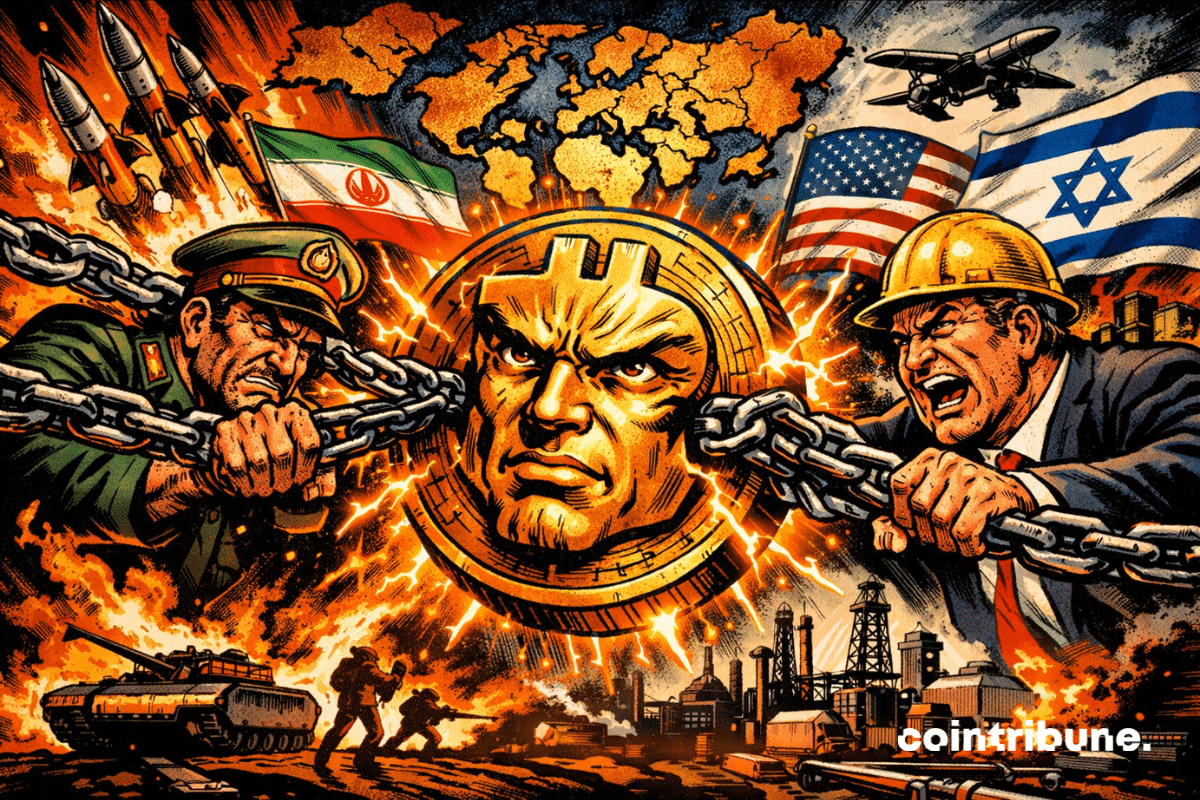
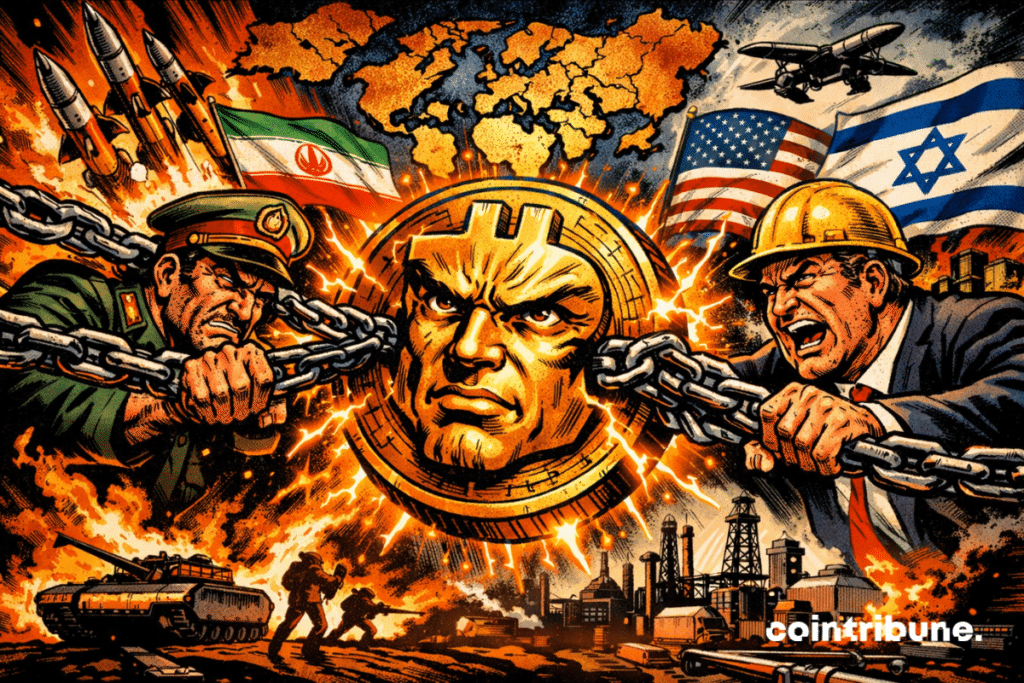
Everything can change in a few days. The war between Iran, the United States and Israel is not only upsetting the geopolitical balance, it is already reshaping global markets. Oil is rising, gas under pressure, precious metals rumbling, sea lanes weakened, increased volatility… we are entering a phase where economic indicators are rapidly evolving. In this context of growing geopolitical tension, Bitcoin is gradually establishing itself as an indicator of these transformations and revealing a deeper mutation of the global system, the first consequences of which are already visible to us.
In short
- Geopolitical tensions are moving energy to the center of markets, where oil and gas are becoming key levers.
- Precious metals are losing their safe haven role in an environment dominated by inflation and liquidity.
- The petrodollar system is gradually evolving towards a more fragmented and multipolar model.
- Bitcoin is emerging as a sensor of mistrust without acting as a traditional safe harbor.
When energy fluctuates, markets fall
“Control the oil and you control the nations,” a historical quote often attributed to Henry Kissinger, the former US Secretary of State, that takes on full significance today as the conflict in the Middle East shifts energy back to the center of the global economic balance.
Energy serves as a key factor in any major crisis in the global energy market. In the short term, tensions will trigger immediate reactions in financial markets, but their impact will quickly go beyond this initial phase. It is through the energy industry that major economic crises often begin to materialize.
The closure of the Strait of Hormuz, which transports about 20% of the world’s oil and a significant share of liquefied natural gas (LNG), perfectly illustrates this vulnerability of energy supply flows. The disruption to traffic in the area caused an immediate shock to energy markets.
In the first weeks of the conflict, oil prices broke the $100 per barrel mark, with peaks reaching $114. Some projections even predicted higher levels in the event of a prolonged blockade.
However, the most significant impact is experienced by the gas market, especially in Europe. Since the start of the crisis, European gas prices have jumped 20% to 45% in a few days, reaching around €46/MWh, before climbing to almost €70/MWh (+29%) in the following weeks.
In some cases, prices almost doubled in March, mainly due to a partial shutdown of gas exports and tensions in energy infrastructures, which reinforced the perception of a global energy crisis.
This dynamic is also visible in real-time in the markets, as shown by the movements of TTF contracts reported by Bloomberg on X, where some projections call for sustainably high prices until 2027 amid ongoing geopolitical tensions.
This increase has direct implications for the real economy. In Europe, rising energy prices contribute to an estimated inflation rate of between 2.5% and 2.8%, taking into account growth prospects and investors’ asset allocation.
Beyond the numbers, the dynamic is clear: markets are now reacting as much to scenarios as to events themselves. Investors are adjusting their positions based on risks of escalation, disruption of energy flows or a global economic slowdown, which will cause significant movements in capital flows. But most importantly, these tensions profoundly redefine perceptions of value.
When access to energy becomes uncertain, it is no longer just financial assets that structure the economy, but the ability to secure basic resources. Oil, sea lanes and gas reserves thus become central, revealing a shift where value now depends on controlling sources and flows.
Gold and Silver: Safe Assets Tested by War
Geopolitical crises traditionally support precious metals, especially gold, among defensive financial assets. During the escalation between Iran, the US and Israel, this pattern initially held with prices in the vicinity of $4,700 to $4,800 per ounce. But this dynamic quickly reversed. Gold has fallen -17% since the start of the conflict and as much as -25% from recent highs.
Silver follows the same trajectory, with declines reaching -25%. This volatility is mainly explained by rising energy prices, which support inflation and the maintenance of high interest rates, which is an unfavorable environment for gold. Additionally, investors favor liquidity, leading to massive selling, including safe-haven assets.
In the context of strong global economic instability, even supposedly stable assets are losing their traditional behavior. Precious metals no longer consistently play their role as a safe haven, revealing a market now affected by energy, rates and geopolitical tensions.
The Petrodollar Under Pressure: Overturning the Monetary System
In addition to energy and markets, the current geopolitical upheavals fit into the broader transformation of the international monetary system. Since the 1970s, markets have mostly priced oil in dollars, sustainably reinforcing the US currency’s dominance after the end of the gold standard.
This system allowed the dollar to become the main global reserve currency. However, this dominance is gradually evolving. According to the IMF’s COFER program, the dollar’s share of global reserves has fallen from around 70% in the early 2000s to nearly 56% today, reflecting the gradual diversification of central banks towards other currencies.
Recent geopolitical tensions have accelerated this dynamic. From 2022, several countries, including China and Russia, multiplied energy transactions in alternative currencies, especially the yuan and ruble. Similarly, some BRICS members are discussing the creation of alternative exchange mechanisms for international trade.
The current crisis, marked by a war between Iran, the US and Israel, adds another dimension to this development. Conflicts over energy routes and uncertainty associated with sanctions reinforce incentives to diversify payment mechanisms and currency reserves.
Within this framework, some initiatives already illustrate this transition: At the time of writing, sources indicate that Iran has implemented a system of controlled passages of the Revolutionary Guards in the Strait of Hormuz. In this area, some ships must obtain prior verification and in some cases pay in Chinese yuan or cryptocurrencies to ensure their transit. This system reflects broader efforts to circumvent sanctions and reduce dependence on the US dollar.
What the markets are witnessing today is the gradual questioning of a system that has worked for more than 50 years. So, the international monetary system is not disappearing, but evolving towards a more fragmented configurationwhere several benchmarks exist side by side. This development marks a progressive shift from a unipolar monetary system towards a multipolar system.
Bitcoin: A New Safe Haven Amidst Geopolitical Chaos?
It is in this context of global recomposition that a deeper evolution of the concept of value appears. As geopolitical dynamics redefine the economic balance, Bitcoin stands out as an asset that can evolve independently of traditional systems and the classical financial system.
This asset fits into this dynamic as a unique instrument whose decentralized structure and limited supply of 21 million units strengthens its position in an environment marked by economic and geopolitical instability.
However, they differ from traditional safe harbors in their behavior. During the early stages of the conflict, the bitcoin market fell by around 15% before quickly recovering, with daily swings sometimes exceeding 5%, confirming volatility significantly higher than that of traditional assets.
However, this volatility is part of an increasingly structured market. Increasing liquidity, derivatives, ETFs and arbitrage strategies help absorb some of the shocks, favoring phases of rapid correction followed by significant rebounds. Unlike energy or metals, directly affected by conflict, Bitcoin reacts more indirectly, with less brutal impact but more significant volatility.
This biphasic behavior – initial decline, then recovery – shows that it does not function as a classic safe haven, while gradually revealing the limits of the current system. Rather than a daily currency, it tends to establish itself as a global store of value. Bitcoin doesn’t protect immediately – it absorbs systemic distrust. Its ability to evolve outside state boundaries while remaining integrated into global dynamics gives it a special place in this transitional phase.
We are thus witnessing a progressive redefinition of value, where traditional benchmarks now coexist with new forms of assets. In this new equilibrium, markets now react as much to global tensions as they do to the economy. As a result, value no longer depends only on currency, but on international balances, resources and confidence in the monetary system. The transformation that Bitcoin does not create, but reveals.
Maximize your Cointribune experience with our “Read and Earn” program! Earn points for every article you read and get access to exclusive rewards. Register now and start reaping the benefits.

Journalist and web editor passionate about the world of cryptocurrencies and Web3 technologies. I focus on the latest trends and news in order to offer high quality content to a wide audience in the industry.