21:05 ▪
3
min read ▪ by
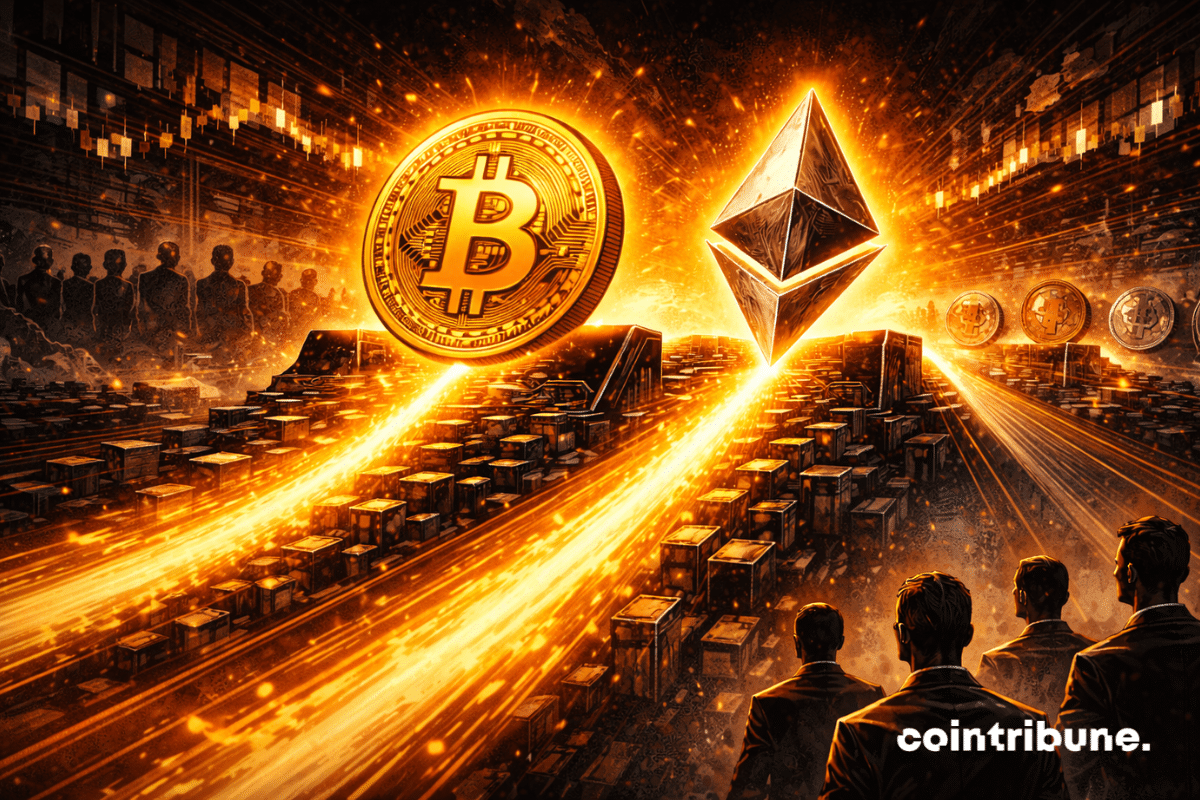
Institutional investor interest in cryptocurrencies continues to grow, but not all assets benefit from the same enthusiasm. As crypto ETFs proliferate, the strategies of traditional financial giants offer valuable insight into market priorities. BlackRock, the world’s largest asset manager, has just provided a clear answer: for the vast majority of investors, flows are largely dominated by two assets. According to the company, most demand for crypto ETFs is now focused on Bitcoin and Ethereum, while other cryptos remain mostly in the background.
In short
- BlackRock notes that institutional demand for crypto ETFs is mainly focused on Bitcoin and Ethereum.
- Investors view Bitcoin as a store of value comparable to “digital gold” in their portfolios.
- Ethereum is seen as a technological investment associated with the development of blockchain and decentralized applications.
- Other cryptocurrencies generate much more limited interest among institutional investors.
Bitcoin and Ethereum capture most of the institutional demand
In a recent speech, Robert Mitchnick, Head of Crypto at BlackRock, provided a clear analysis of institutional demand for crypto ETFs.
According to him, the interest of investors is focused almost exclusively on the two largest cryptocurrencies on the market. He explains it “Client interest is largely focused on Bitcoin and Ethereum”while other assets only trigger “pockets of interest” that are much more limited.
This vision is based on several BlackRock findings:
- Bitcoin is considered a monetary alternative and form digital gold in institutional portfolios;
- Ethereum is considered a technological investment associated with the development of blockchain and decentralized applications;
- Other cryptocurrencies generate much more limited interest among institutional investors.
Investment data confirms this trend. BlackRock reports that more than 90% of investors in its Bitcoin ETF adopt a long-term holding strategy that reflects an accumulation logic rather than a short-term speculative approach. This dynamic shows how major financial players are gradually integrating these assets into their portfolios.
BlackRock’s Strategic Offensive on Ethereum ETFs
Following this market vision, BlackRock also unveiled a new stage in its crypto strategy with the launch of an Ethereum ETF including staking. Called the iShares Staked Ethereum Trust ETF, the product allows investors to benefit from both exposure to the price of ETH and income generated by staking on the network. Such developments reflect the asset manager’s desire to expand its offering of financial products linked to blockchain infrastructures.
This initiative fits into a cautious but structured approach. BlackRock says it accepts a strict selection of assets that are likely to be integrated into its financial products. According to Robert Mitchnick, the company prefers cryptocurrencies with sufficient market depth, high liquidity and a clear investment framework before considering their integration into ETFs.
The current concentration of institutional flows on Ethereum and Bitcoin confirms their position as dominant assets in traditional finance. If other cryptocurrencies manage to reach a comparable level of maturity and adoption, they could gradually catch the attention of asset managers.
Maximize your Cointribune experience with our “Read and Earn” program! Earn points for every article you read and get access to exclusive rewards. Register now and start reaping the benefits.

A graduate of Sciences Po Toulouse and holder of the blockchain consultant certification issued by Alyra, I joined the Cointribune adventure in 2019. Convinced of the potential of blockchain to transform many sectors of the economy, I committed myself to raising awareness and informing the general public about this ever-evolving ecosystem. My goal is to enable everyone to better understand blockchain and take advantage of the opportunities it offers. I strive every day to provide an objective analysis of current events, decipher market trends, convey the latest technological innovations, and put into perspective the economic and social issues of this ongoing revolution.
DISCLAIMER OF LIABILITY
The views, thoughts and opinions expressed in this article are solely those of the author and should not be taken as investment advice. Before making any investment decision, do your own research.