10:05 AM ▪
4
min read ▪ by
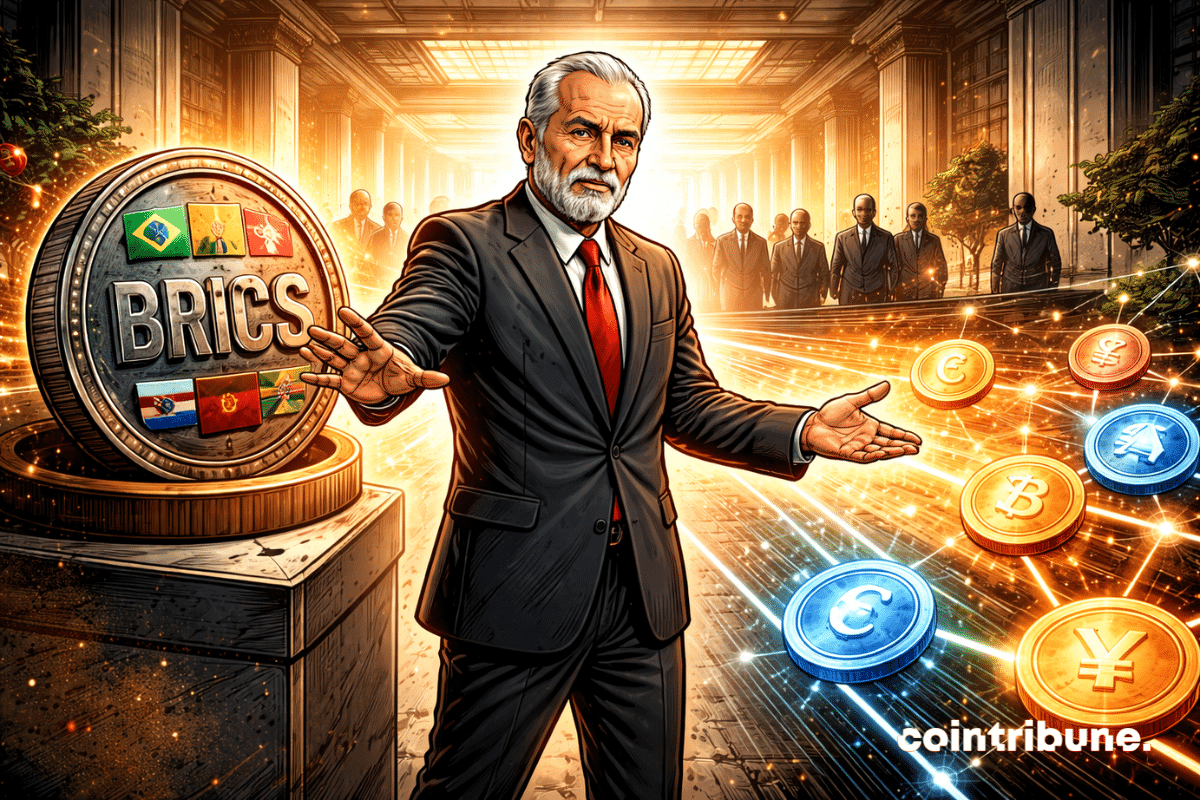
There is no BRICS currency, at least not yet. As Lula ends speculation about a common currency, a much deeper transformation is quietly taking place. Behind this denial, major emerging economies are accelerating the revision of international exchanges and gradually bypassing the dollar. A new global monetary architecture is already beginning to take shape between political discourse and financial reality.
In short
- Lula ends the speculation by stating that no common BRICS currency is currently under consideration.
- Brazil’s president advocates a pragmatic approach aimed at diversifying stock markets without a sudden break with the dollar.
- Despite this denial, several countries in the bloc are already accelerating the use of local currencies in their trade exchanges.
- Major agreements, particularly between Russia, China and Brazil, illustrate this transition to a system less dependent on the dollar.
Lula rejects the idea of a BRICS currency
Luiz Inácio Lula da Silva wanted to end speculation about a common currency for the bloc. In an interview given to India Today TV, he clearly states: “there is no project to create a BRICS currency. There is no discussion within the bloc about the possibility of a new currency”. Brazil’s head of state highlights a misunderstanding of the debate.
Here are the main points to remember from this stance:
- The total absence of any common currency project within BRICS;
- Refusal of an “counter dollar” interpretation of block initiatives;
- Willingness to offer more options in bilateral exchanges;
- Publicly accepted position during the interview and confirmed at the Rio summit.
During the BRICS summit in 2025, Lula elaborated on the envisaged direction: “The world needs to find a way so that our trade relations no longer systematically pass through the dollar”. He mentions a gradual transition, managed by central banks, without a brutal attack on the existing system. The use of local currencies thus appears more like a corrective lever than a radical change.
Financial infrastructures are already bypassing the dollar
In addition to this official discourse, several concrete mechanisms testify to the ongoing transformation. This development is illustrated by trade between Russia and China. According to Russian Finance Minister Anton Siluanov 99.1% commercial payments between the two countries are now made in rubles and yuan. For their part, China and Brazil have implemented a similar system from 2023, covering an estimated trade volume of about $100 billion a year.
This BRICS strategy also applies to more structured instruments. The president of the New Development Bank, Dilma Rousseff, emphasizes this “Local currency operations will remain a top priority for building a more diversified and balanced international financial system”. At the same time, the project “BRICS unit” is taking shape. It is a blockchain-based settlement tool backed by 40% gold and 60% basket of block currencies. Designed as an interbank settlement tool, it aims to bypass the SWIFT network and reduce exposure to sanctions.
This development remains bounded by significant limitations. Several Indian officials emphasize the dollar’s stabilizing role in the global economy, while structural constraints remain, particularly in terms of liquidity and convertibility. The dynamics initiated by BRICS fits into a gradual transformation. This trend is illustrated by the dollar’s share of global reserves, which has fallen from roughly 70% to 59% over two decades. The bloc moves forward with gradual adjustments without immediately interrupting the existing monetary order.
Maximize your Cointribune experience with our “Read and Earn” program! Earn points for every article you read and get access to exclusive rewards. Register now and start reaping the benefits.
A graduate of Sciences Po Toulouse and holder of the blockchain consultant certification issued by Alyra, I joined the Cointribune adventure in 2019. Convinced of the potential of blockchain to transform many sectors of the economy, I committed myself to raising awareness and informing the general public about this ever-evolving ecosystem. My goal is to enable everyone to better understand blockchain and take advantage of the opportunities it offers. I strive every day to provide an objective analysis of current events, decipher market trends, convey the latest technological innovations, and put into perspective the economic and social issues of this ongoing revolution.
DISCLAIMER OF LIABILITY
The views, thoughts and opinions expressed in this article are solely those of the author and should not be construed as investment advice. Before making any investment decision, do your own research.